



False positives are one of the most frustrating problems in uptime monitoring. Receiving an alert that your service is down when it is actually running can waste valuable time and lead to unnecessary investigation. At FunnyMonitors, we designed our monitoring system specifically to minimise this problem.
Unlike many monitoring platforms, we do not rely on another server in a different location to confirm an outage. The common industry approach is to perform a second check from another monitoring node to verify that the first failure was genuine. While this may seem sensible, it introduces several complications and does not guarantee a correct result.

For example, the verifying server may experience its own routing issues, network congestion or regional restrictions. In some countries such as China or Russia, internet filtering and firewall policies can affect how services respond from different regions. This means a second server might receive a completely different result from the original check, making the verification unreliable.
Another downside of this model is that it doubles the resources required to perform checks. Every failure requires another monitoring server to repeat the same request, increasing infrastructure complexity, maintenance requirements and operational overhead — yet still without guaranteeing perfect verification.
FunnyMonitors approaches this differently. When a monitor check fails, our system immediately performs a series of internal validation checks within seconds. First, we verify that our monitoring server can still route traffic through our global network, confirming that our infrastructure is operating normally.

Once we confirm our system is reachable, we immediately perform another check of your monitor. This second validation is performed alongside a verification of our own connectivity and system status, ensuring the failure is not caused by our own network conditions.
Because these checks happen instantly and within the same monitoring environment, we can verify the result almost immediately without relying on external nodes that may be affected by regional network differences.
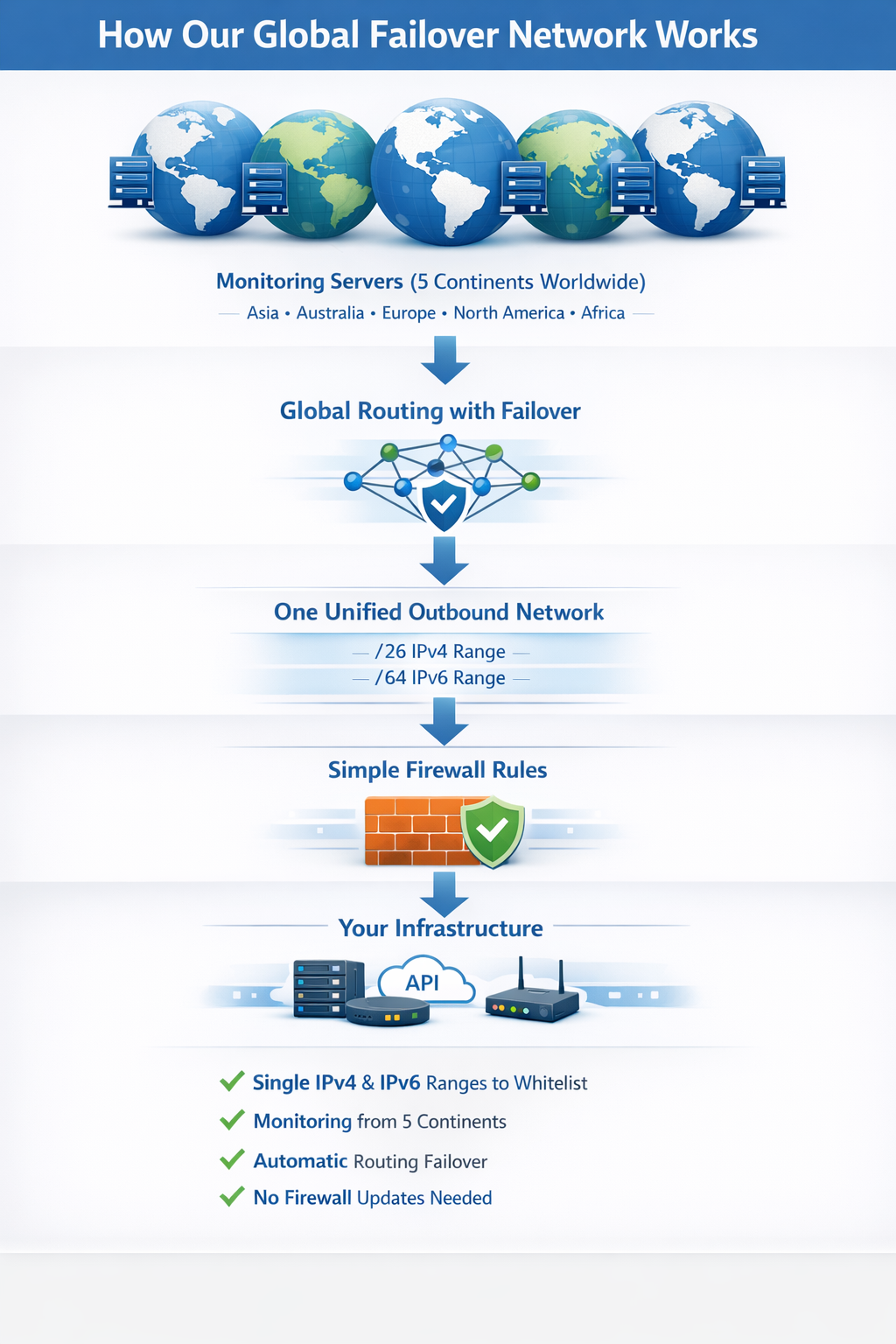
This approach allows us to confirm the status of your monitor quickly and reliably while avoiding the delays and inconsistencies that can occur when relying on geographically distributed verification servers.
While no monitoring system can claim 100% perfect verification, our approach focuses on fast validation, controlled infrastructure and intelligent checks to significantly reduce the chances of false positives while delivering alerts as quickly as possible.